


If you or someone you love has been hurt in an Uber or Lyft accident in Austin, you are probably dealing with painful injuries, unexpected medical bills, and a lot of questions about what comes next. You may not know who is responsible for paying your treatment costs, or whether the rideshare company’s insurance will actually cover what you need. What you do know is that the accident turned your life upside down, and you deserve answers.
Austin is one of the fastest-growing cities in Texas, and that growth has brought a surge in rideshare traffic on local roads. Thousands of Uber and Lyft vehicles move through the city every day, picking up and dropping off passengers on congested corridors like I-35, MoPac, and Lamar Boulevard. That volume increases dramatically during major events like SXSW, Austin City Limits, and University of Texas football weekends, when rideshare demand spikes and the risk of a serious collision rises along with it. The Texas Department of Transportation reports that one reportable crash occurred every 57 seconds on Texas roadways, and more than 251,000 people were injured in motor vehicle accidents statewide.[1] Travis County consistently ranks among the highest in the state for total traffic collisions, and rideshare vehicles are part of that picture every single day.[2]
At Jim Adler, The Texas Hammer®, we have spent more than 50 years fighting for injured Texans, and we know how to take on the insurance companies and corporate legal teams that Uber and Lyft rely on to protect their bottom line. If a rideshare accident in Austin left you or your family dealing with serious injuries, our team is ready to fight for the compensation you deserve.
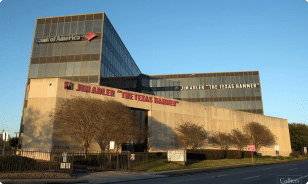
With offices serving Austin and communities throughout Texas, our team can move quickly to protect evidence and start building your rideshare claim. Your first step is a FREE rideshare accident case review.
Call 1-800-505-1414 now or click here to get started online.
A rideshare accident is not the same as a typical car accident, and trying to handle one without experienced legal help can cost you far more than you realize. Uber and Lyft are massive corporations with teams of lawyers and insurance adjusters whose only job is to protect the company’s money, not to make sure you receive fair compensation for your injuries. These companies have built their entire business model around classifying drivers as independent contractors rather than employees, and that classification is central to their legal defense after an accident. When a collision happens, the company’s first move is often to distance itself from the driver and argue that it bears no direct responsibility for what happened to you.
What makes these cases even more difficult is the layered insurance system that governs every rideshare trip in Texas. Texas Insurance Code Chapter 1954 requires different levels of coverage depending on what the driver was doing at the exact moment of impact, ranging from limited liability minimums of $50,000 per person when the driver is waiting for a ride request to a $1 million commercial policy when a passenger is in the vehicle.[3] Insurance companies on all sides use this complexity to delay payments, deny claims, and point fingers at each other while you are left struggling to cover your treatment costs and lost wages. An experienced Austin Uber accident lawyer understands how to cut through these disputes, identify every policy that applies to your situation, and fight to make sure you recover the full value of your damages.
If you or someone you love has been hurt in an Uber or Lyft accident in Austin, do not wait to get legal help. The Texas Hammer® offers a free consultation so you can understand your options and take the first step toward recovery. You pay no attorney fees unless we recover compensation for you.* Call us today or fill out the form on this page to get started.
Rideshare accidents in Austin rarely happen by chance, and most of them trace back to a driver or company failing to prioritize safety over speed and profit. Understanding how these accidents happen can help you recognize when you have a valid claim against a negligent rideshare driver or another responsible party. The causes outlined below represent patterns that our Austin Lyft accident lawyer team sees over and over again in these cases, and when these safety failures lead to a serious collision, the people responsible should be held accountable for the harm they cause.
Distracted driving is one of the most common and most dangerous behaviors among rideshare drivers because the nature of the job itself encourages it. Uber and Lyft drivers rely heavily on their phones to accept ride requests, follow GPS navigation, communicate with passengers, and monitor their earnings, all while operating a vehicle in heavy Austin traffic. Every second a driver spends looking at a screen instead of the road is a second they cannot react to a sudden stop, a pedestrian stepping into a crosswalk, or a motorist merging into their lane.
The Texas Department of Transportation reports that distracted driving contributes to thousands of injury crashes across the state each year, and rideshare drivers face a higher risk of distraction than most because their phone is essentially a required work tool.[6] When the evidence shows that a driver was interacting with the Uber or Lyft app at the time of your accident, that behavior can be powerful proof of negligence in your personal injury claim.
Many rideshare drivers feel pressure to complete as many trips as possible in a single shift because their income depends on volume. That financial pressure pushes some drivers to speed through residential neighborhoods, weave aggressively through traffic, and take risks they would not normally take behind the wheel. On high-speed corridors like I-35 and MoPac, even a few miles per hour over the limit can dramatically reduce a driver’s ability to stop in time to avoid a collision.
Reckless driving also includes running red lights, rolling through stop signs, making illegal U-turns near pick-up locations, and tailgating other vehicles in congested traffic. These are not minor traffic infractions when they involve a 4,000-pound vehicle carrying passengers through one of the busiest cities in Texas. An Austin Lyft accident attorney from our team can obtain dash cam footage, traffic camera recordings, and the vehicle’s data to prove that a driver’s reckless behavior caused your accident.
Unsafe pick-up and drop-off stops create a hazard that is unique to rideshare vehicles and one that other motorists, cyclists, and pedestrians have no way to predict. Drivers frequently pull over in no-stopping zones, double-park on busy streets, or stop abruptly in active traffic lanes to let passengers in or out, and these sudden maneuvers can catch surrounding traffic off guard and cause rear-end collisions or sideswipe accidents.
This problem is especially dangerous near Austin’s high-traffic entertainment areas along Sixth Street, Rainey Street, and the East Austin bar corridor, where rideshare pick-ups and drop-offs happen constantly during evening and late-night hours. Narrow streets, heavy foot traffic, and limited visibility all combine to create conditions where a single careless stop can trigger a serious crash that injures passengers, pedestrians, or other drivers sharing the road.
Unlike commercial truck drivers who must follow federal hours-of-service regulations, Uber and Lyft drivers face no mandatory rest period requirements under current rideshare rules in Texas. Many drivers work extremely long hours across multiple apps without adequate breaks, and the resulting fatigue can impair reaction time, judgment, and alertness just as severely as alcohol. A driver who has been on the road for 12 or 14 hours straight is a danger to every person sharing the road with them.
Impaired driving is also a persistent concern in the rideshare industry, particularly during late-night hours when demand peaks around bars, restaurants, and live music venues throughout Austin. Some drivers get behind the wheel after consuming alcohol or using substances, putting their passengers and everyone else on the road at serious risk. When a fatigued or impaired rideshare driver causes an accident, both the driver and the company that failed to monitor their fitness to drive may share liability for your injuries.
Rideshare drivers do not always know Austin’s roads the way a full-time professional driver would, and that unfamiliarity leads to sudden lane changes, wrong turns, and last-second braking that puts everyone nearby at risk. Austin’s road network includes complex interchanges, ongoing construction zones, and toll roads that can confuse drivers who are new to the area, and GPS navigation does not always account for real-time conditions like lane closures or detours.
This problem intensifies during major events like SXSW, Austin City Limits, and University of Texas game days, when hundreds of additional rideshare drivers flood into the city to meet surging demand. Many of these drivers have little or no experience navigating Austin’s busiest roads during peak congestion, and the result is a measurably higher risk of a serious accident for passengers, other motorists, and pedestrians alike. Our attorneys at Jim Adler & Associates understand these local conditions and know how to investigate the specific factors that contributed to your rideshare car accident.
The moments after a rideshare accident can be overwhelming, and it is hard to think clearly when you are hurt, scared, and trying to process what just happened. Taking certain steps in the hours and days following your accident may help protect both your health and your ability to seek compensation later. The following suggestions are general guidelines only, and your specific situation may require different actions depending on the circumstances.
Every rideshare accident is different, and you should always prioritize your health and safety above everything else. If you have questions about your specific situation or want to understand your legal options, our team is here to help with a free consultation.*
One of the most confusing aspects of any rideshare accident claim is figuring out which insurance policy actually covers your injuries and who should be held responsible for paying your damages. Unlike a typical car accident, where one driver’s personal auto insurance generally handles the claim, Uber and Lyft accidents involve multiple layers of coverage that shift based on the driver’s status on the app at the exact moment of impact. Texas Insurance Code Chapter 1954 establishes the specific insurance requirements that transportation network companies and their drivers must maintain at each phase of a rideshare trip, and understanding how these phases work is key to knowing what compensation may be available to you.[3]
Our Austin Uber accident lawyers help Texans get the financial compensation they deserve. We only get paid if you win.* And we fight to win.
When a rideshare driver is not logged into the Uber or Lyft app at the time of an accident, the rideshare company’s insurance does not apply at all. In this situation, the driver is treated just like any other private motorist on Texas roads, which means only their personal auto insurance policy would cover damages from the collision. If the driver’s personal coverage is insufficient to pay for your injuries, you may need to rely on your own uninsured or underinsured motorist coverage to fill the gap.
This scenario can create real challenges for accident victims because personal auto policies in Texas often carry low coverage limits that may not come close to covering serious injuries. An Austin Uber accident lawyer can help you identify all available sources of coverage and pursue every dollar you are entitled to recover, even when the rideshare company’s insurance is not in play.
When a rideshare driver has the app turned on and is available to receive ride requests but has not yet been matched with a passenger, a limited insurance policy applies. Under Texas Insurance Code Section 1954.052, the automobile insurance policy during this phase must provide at least $50,000 for bodily injury or death per person, $100,000 per accident, and $25,000 for property damage.[3] These are the minimum amounts required by Texas statute, and they may not be enough to cover catastrophic injuries from a serious collision.
What makes this phase especially tricky is that Section 1954.151 of the same statute allows personal auto insurers to exclude coverage whenever a driver is logged into a rideshare app, even if the driver has not accepted a ride.[3] This means you could find yourself in a situation where the rideshare company offers only limited coverage while the driver’s personal insurer refuses to pay anything at all. An Austin Lyft accident attorney who handles these cases regularly knows how to navigate these coverage gaps and fight to make sure your claim is not shortchanged.
Once a driver accepts a ride request and begins traveling to collect a passenger, or when a passenger is already in the vehicle, the rideshare company’s full commercial insurance policy takes effect. Under Texas Insurance Code Section 1954.053, the automobile insurance policy during this phase must provide a total aggregate limit of liability of $1 million for death, bodily injury, and property damage per incident.[3] This coverage also includes uninsured and underinsured motorist protection, which can be critical if a third-party driver who caused the collision does not carry adequate insurance of their own.
If you were a passenger in the rideshare vehicle, you were most likely injured while the driver had an active ride, which means this $1 million commercial policy should apply to your claim. Insurance companies do not always make this process straightforward, and disputes over the driver’s exact app status at the moment of impact are one of the most common tactics insurers use to delay or deny rideshare accident claims in Texas.
Depending on the circumstances of your accident, more than one party could share responsibility for what happened to you. If another vehicle caused the collision, that driver and their insurer would be the primary liable party, with the rideshare company’s uninsured or underinsured motorist coverage potentially filling the gap if the at-fault driver does not carry enough insurance to cover your damages. In some cases, the rideshare driver and another motorist may both share fault for the accident, which means multiple insurance policies could apply to your claim.
Under Texas Civil Practice and Remedies Code Section 33.001, each party’s share of financial responsibility is based on their percentage of fault in causing the accident.[7] This proportionate responsibility system means that identifying every liable party and every available insurance policy is critical to recovering the full compensation you deserve. Our Austin Lyft accident lawyer team at Jim Adler & Associates investigates every angle of a rideshare accident to make sure no responsible party and no insurance dollar is overlooked.
Reporting an accident to Uber or Lyft and filing a claim through their insurance process can be confusing and frustrating, especially when you are dealing with painful injuries and mounting medical bills at the same time. The rideshare company’s claims team is not working for you, and the insurance adjusters handling your file are trained to protect the company’s bottom line. Quick settlement offers made in the days after an accident are almost always far less than what your claim is actually worth, and accepting one before you understand the full extent of your injuries could leave you paying out of pocket for future treatment you did not anticipate.
An Austin Uber accident attorney from our team can take over all communications with the rideshare company’s insurance representatives, the driver’s personal insurer, and any other parties involved in your claim. We handle the paperwork, the negotiations, and the legal strategy so that you can focus entirely on your recovery without worrying about being taken advantage of by experienced insurance adjusters.
“The insurance company wanted me to settle for a lot less and Jim Adler negotiated for me to get a lot more. ” Ariana
“Jim Adler took care of, literally, everything. I didn't have to do anything.” Whitney
“Man, he worked fast. From my vehicle getting fixed ... and getting paid what I deserve for the accident. ” Sergio
“Jim Adler was to me, he was the last string of hope that I had. He was my saver.” Bryan
“I called Jim Adler and he came through. They got me more than the insurance company had offered.” Tamara
“Definitely took charge of the situation from the very beginning. It was A-Z. I didn't have to do anything... I was definitely happy with the compensation.” Troy
Serious rideshare accidents leave victims facing enormous financial pressure at a time when they are least able to handle it. You may be unable to work while treatment costs continue to pile up, and the emotional toll of living with painful injuries can affect every part of your daily life. Understanding what types of compensation you may be entitled to can help you make informed decisions about your case and avoid settling for less than you need to fully recover.
Medical expenses are often the largest category of damages in a rideshare accident case, and they can add up far faster than most people expect. Emergency room visits, ambulance transportation, surgeries, hospital stays, prescription medications, physical therapy, and diagnostic imaging like MRIs and CT scans all generate significant costs in the weeks and months after a serious collision. Many accident victims also require long-term treatment such as ongoing rehabilitation, pain management, assistive devices, or home modifications to accommodate permanent injuries.
Your compensation claim should account not only for the medical bills you have already received but also for the future treatment your doctors say you will need as your recovery continues. Insurance adjusters often try to settle claims before victims understand the full scope of their medical needs, which can leave you paying out of pocket for care that should have been covered by the person who caused your accident. An Austin Uber accident lawyer from our team works with medical professionals to document the complete cost of your treatment and make sure nothing is left out of your claim.
If your injuries prevent you from working, you may be entitled to compensation for the income you have already lost and the earnings you will miss in the future. Many rideshare accident victims face weeks or months away from their jobs while they recover from surgeries, attend physical therapy, or deal with pain that makes it impossible to perform their normal duties. The financial strain of lost paychecks on top of growing medical bills can put tremendous pressure on you and your family during an already difficult time.
The impact on your earning capacity can extend far beyond your immediate recovery period. If your injuries prevent you from returning to your previous occupation or limit the type of work you can do going forward, you may be entitled to compensation for your diminished earning capacity over the rest of your working life. Our team works with economic experts when necessary to calculate the full financial impact of your injuries, including lost benefits like health insurance and retirement contributions that you would have earned if the accident had not happened.
Not every loss from a rideshare accident shows up on a bill or bank statement, and the law recognizes that your physical pain and emotional suffering have real value that deserves fair compensation. Pain and suffering damages account for the constant discomfort you endure during your recovery, the anxiety and fear that often follow a violent collision, and the depression and emotional distress that can accompany serious injuries. Many accident victims experience nightmares, difficulty sleeping, and intense anxiety about riding in vehicles again, all of which affect their quality of life in ways that go far beyond financial losses.
Loss of enjoyment of life is a related category that compensates you for hobbies, activities, and experiences you can no longer participate in because of your injuries. If you used to enjoy exercising, playing with your children, traveling, or simply living without chronic pain, the accident has taken something valuable from you that deserves recognition in your claim. These non-economic damages are harder to calculate than medical bills, but an experienced Austin Lyft accident lawyer knows how to present compelling evidence of your suffering to insurance companies and juries.
When a rideshare accident leaves you with permanent injuries, scarring, or disfigurement, the long-term impact on your life can be profound. Permanent scarring and visible disfigurement can affect your self-confidence, your relationships, and how others perceive you in both personal and professional settings. Under Texas Civil Practice and Remedies Code Chapter 16, you have the right to seek compensation for these lasting changes to your physical appearance and your ability to live the life you had before the accident.[5]
If your injuries have damaged your relationship with your spouse, including your ability to provide companionship, support, and intimacy, your spouse may have a separate claim for what the law calls loss of consortium under Texas Civil Practice and Remedies Code Chapter 41.[8] These damages recognize that a serious injury does not just affect the person who was hurt but also the people closest to them. Our attorneys evaluate every aspect of how your accident has changed your life and your family’s life to make sure the full picture is presented in your claim.
A rideshare collision can cause significant damage to your vehicle and the personal belongings inside it at the time of the accident. Property damage compensation covers the cost of repairing your vehicle or replacing it entirely if the damage is severe enough that repair is not practical. You may also be entitled to recover the value of electronics, clothing, child safety seats, and other personal items that were damaged or destroyed in the collision.
Many accident victims do not realize that they can also seek compensation for the loss of use of their vehicle during the time it takes to complete repairs or find a replacement. The cost of rental cars, rideshare fares, and other alternative transportation can add up quickly, and these expenses are a direct result of someone else’s negligence. An Austin Lyft accident attorney from our team makes sure that every category of property loss is documented and included in your claim.
In most rideshare accident cases, compensation focuses on covering your actual losses and making you as whole as possible. In rare cases involving especially reckless or outrageous conduct, Texas Civil Practice and Remedies Code Chapter 41 allows for an additional category called exemplary damages, commonly known as punitive damages.[8] These damages are designed to punish the responsible party and discourage similar behavior in the future, and they may apply when the evidence shows fraud, malice, or gross negligence.
Punitive damages might come into play if a rideshare driver was severely intoxicated at the time of your accident, if the rideshare company knowingly allowed a driver with a dangerous history to remain on its platform, or if an insurance company engaged in bad faith tactics to deny your legitimate claim. While punitive damages are not available in every case, they can significantly increase your total recovery when the facts support them. Our Austin Uber accident attorney team evaluates every case for potential punitive damages and pursues them aggressively when the evidence warrants it.c
Every rideshare accident case is unique, and the compensation you may be entitled to depends on the specific facts of your situation. Our attorneys conduct a thorough evaluation of every way the accident has affected your life, financially, physically, and emotionally, to pursue the full compensation you deserve.
With hundreds of Uber accident lawsuits filed, our numbers speak for themselves.
Client Received
$15, 461, 000
Attorney Fees
$10, 398, 984 .43
Expenses
$140, 015 .57
Client Received
$15, 461, 000
Attorney Fees
$10, 398, 984 .43
Expenses
$140, 015 .57
Client Received
$9, 436, 300
Attorney Fees
$6, 399, 965
Expenses
$163, 735
Client Received
$9, 436, 300
Attorney Fees
$6, 399, 965
Expenses
$163, 735
Client Received
$4, 898, 086
Attorney Fees
$3, 806, 000
Expenses
$227, 835
Client Received
$4, 898, 086
Attorney Fees
$3, 806, 000
Expenses
$227, 835
Client Received
$3, 237, 600
Attorney Fees
$2, 199, 623 .77
Expenses
$62, 776 .23
Client Received
$3, 237, 600
Attorney Fees
$2, 199, 623 .77
Expenses
$62, 776 .23
Texas sets strict deadlines for filing personal injury and wrongful death lawsuits, and missing these deadlines can permanently destroy your right to seek compensation no matter how serious your injuries may be. Understanding when the clock starts and how much time you have is one of the most important things you can do to protect yourself and your family after a rideshare accident. The filing rules that apply to Uber and Lyft accident claims are the same ones that govern all personal injury cases in the state, and they leave no room for exceptions once the deadline passes.
Under Texas Civil Practice and Remedies Code Section 16.003, you generally have two years from the date of your accident to file a personal injury lawsuit in civil court.[5] If a loved one was killed in a rideshare collision, wrongful death claims must also be filed within two years from the date of the victim’s death.[5] These deadlines apply whether you were a passenger in the Uber or Lyft vehicle, a driver in another car, a pedestrian, or a cyclist who was struck by a rideshare driver. Once the two-year period expires, the court will almost certainly refuse to hear your case, and you will lose your right to recover compensation forever.
The statute of limitations is not the same as an insurance company’s internal reporting deadline. Many insurance policies require you to report an accident within days or weeks, and failing to meet those shorter deadlines can complicate your claim even if you are still within the two-year window for filing a lawsuit. An Austin Uber accident lawyer can help you meet every applicable deadline and make sure your right to seek compensation is fully protected from the very beginning of your case.
Two years may sound like plenty of time, but building a strong rideshare accident case requires extensive investigation, and critical evidence can disappear long before that deadline arrives. Uber and Lyft trip data, driver app logs, and vehicle event recorder information may be overwritten or become more difficult to obtain as time passes. Surveillance footage from nearby businesses is often recorded over within days or weeks, and witnesses who saw the accident may forget important details or become harder to locate the longer you wait to begin your case.
The rideshare company and its insurance carrier are not waiting around, and neither should you. Their investigators begin collecting evidence and building their defense the moment an accident is reported, and every day that passes without an attorney protecting your interests gives them more time to shape the narrative in their favor. Contacting an Austin Lyft accident lawyer as soon as possible after your accident gives our team the best chance to secure trip records, obtain the driver’s app status data, and lock down witness statements and physical evidence before anything is lost or destroyed.
A few narrow exceptions may extend or shorten the standard two-year filing deadline depending on the specific circumstances of your case. Under Texas Civil Practice and Remedies Code Section 16.001, if the injured person is a minor at the time of the accident, the statute of limitations may be tolled, which means the two-year clock may not begin running until that person reaches the age of eighteen.[9] Similar tolling provisions may apply if the injured person is found to be mentally incapacitated at the time the cause of action accrues.
On the other hand, some situations create even shorter deadlines than the standard two-year period. If a government entity or government employee is involved in the accident, such as a city bus that collided with your rideshare vehicle, Texas Civil Practice and Remedies Code Chapter 101, commonly known as the Texas Tort Claims Act, may require you to provide formal notice of your claim within six months of the incident.[10] Because these exceptions are highly fact-specific and the consequences of missing a deadline are severe, consulting an Austin Uber accident attorney right away is the safest way to make sure your rights are protected.
After a rideshare accident, you are dealing with painful injuries, growing treatment costs, and a complicated insurance process that feels designed to work against you rather than for you. The rideshare company and its insurers have teams of professionals protecting their interests from the moment the accident happens, and you deserve someone equally prepared fighting on your side. At Jim Adler & Associates, we handle every aspect of your rideshare accident case so that you can focus on healing while we focus on getting you the compensation you deserve.
Your first call to our firm costs you nothing, and there is no obligation to move forward after we speak. During your free consultation, an Austin Uber accident lawyer from our team will listen to what happened, review the details of your accident, and give you an honest assessment of your legal options. We believe that every injured person deserves to understand their rights before making any decisions, and we will answer your questions directly without pressure or sales tactics.
Our case evaluation goes beyond just hearing your story. We review the police report, assess the driver’s app status at the time of the collision, identify which insurance policies may apply under Texas Insurance Code Chapter 1954, and begin mapping out a strategy for pursuing maximum compensation.[3] You will walk away from that first conversation understanding what your case may be worth, who should be held responsible, and what the process looks like going forward.
Building a strong rideshare accident case requires moving quickly to collect and secure evidence before it disappears. Our team works to obtain Uber or Lyft trip data, driver app logs, and vehicle event recorder information that can prove exactly what the driver was doing at the moment of impact. We also collect surveillance footage from nearby businesses, traffic camera recordings, witness statements, and photographs of the scene and vehicle damage to build a complete picture of how the accident happened.
Rideshare companies do not voluntarily hand over their internal records, and obtaining this evidence often requires formal legal demands and preservation letters that force the company to protect the data from being overwritten or deleted. An Austin Lyft accident lawyer from our firm knows exactly what evidence to pursue in these cases and how to obtain it through the proper legal channels before the rideshare company has a chance to let it disappear.
Figuring out who is responsible for your accident and which insurance policies should be paying for your damages is one of the most complex parts of any rideshare case. The answer depends on the driver’s app status, whether other vehicles were involved, and whether the rideshare company, the driver, a vehicle manufacturer, or even a government entity bears some share of fault. Our attorneys investigate every party who may have contributed to your accident and identify every insurance policy that could provide coverage for your injuries.
We also handle the difficult work of navigating the layered insurance system that Texas Insurance Code Chapter 1954 creates for rideshare accidents, including disputes over whether the driver was in an active ride period and whether the company’s $1 million commercial policy or the lower waiting-period coverage applies.[3] Under Texas Civil Practice and Remedies Code Section 33.001, each party’s financial responsibility is based on their percentage of fault, which makes identifying every liable party critical to recovering the full value of your claim.[7]
One of the most immediate benefits of hiring an attorney after a rideshare accident is that you no longer have to deal directly with insurance adjusters, corporate claims representatives, or defense attorneys who are trained to protect the company’s money at your expense. Anything you say to these professionals can be used against you later to reduce your compensation, and even innocent comments about how you are feeling can be twisted to suggest your injuries are not as serious as they really are.
Our team takes over every conversation with every insurer and party involved in your case from the moment you hire us. We handle the paperwork, respond to the insurance company’s requests, and conduct all settlement negotiations with the goal of recovering the maximum compensation available for your injuries. Insurance companies know which law firms are prepared to fight and which ones will accept whatever offer lands on the table, and the reputation of Jim Adler & Associates as aggressive advocates for injured Texans gives our clients a meaningful advantage at the negotiation table.
The key to obtaining a fair settlement is being fully prepared to go to court if the insurance company refuses to offer one. Many law firms treat every case as a settlement case, and the insurance companies know it. At Jim Adler & Associates, we prepare every rideshare accident case as though it is going to trial, even while we pursue settlement negotiations. This approach consistently produces better outcomes for our clients because the insurance companies know that The Tough, Smart Lawyer® is not bluffing when we reject an inadequate offer.
If your case does go to trial, our legal team has the courtroom experience and the resources to present your case effectively to a jury. With more than 30 attorneys and 300 legal professionals on our team, we have the depth and financial strength to go head-to-head with Uber, Lyft, and their corporate insurers for as long as it takes to get the result you deserve.
A rideshare accident affects more than just your finances, and our team is here to support you through every challenge the recovery process brings. We can help connect you with medical providers through a Letter of Protection, which allows you to receive treatment now and wait for payment until your case is resolved, so that you do not have to delay the care you need because of concerns about how to pay for it. We keep you informed about the progress of your case at every stage, and you will always have access to a team member who can answer your questions and address your concerns.
Our familiarity with Austin’s roads, courts, and legal community gives us an additional advantage when handling rideshare accident cases in the area. We understand the traffic patterns on I-35, MoPac, and the downtown corridors where many of these accidents happen, and we know the local court system and how cases move through it. That local knowledge, combined with the statewide resources of Jim Adler & Associates, means you get the best of both worlds when you choose our firm to represent you.
At Jim Adler & Associates, you pay no attorney fees unless we recover compensation for you.* Your consultation is completely free, and there is no financial risk to you when you hire our firm. The Texas Hammer® has spent more than 50 years fighting for injured Texans, and we are ready to fight for you. Call us today or fill out the form on this page to get started.
If you or someone you love has been hurt in an Uber or Lyft accident in Austin, you do not have to navigate the complicated rideshare insurance process alone. Jim Adler, The Texas Hammer®, has spent more than 50 years standing up for injured Texans against powerful companies and their insurers, and we are ready to fight for you, too. Our team will investigate your rideshare accident, identify every responsible party and insurance policy, and pursue the full compensation you deserve while you focus on healing and getting your life back on track.
You pay nothing unless we win your case, and your initial consultation is completely free.* Our Austin Uber accident lawyer team is available to speak with you in both English and Spanish. Call us today or fill out the form on this page to get started.
After a serious Uber or Lyft accident in Austin, you probably have a lot of questions about what comes next and how to protect your family’s future. The answers below address some of the concerns we hear most often from people in your situation. If your question is not covered here, our team is always available to speak with you directly during a free consultation.
The biggest difference is the number of insurance policies that may apply to your situation. In a regular car accident, you are typically dealing with one or two personal auto insurance policies. A rideshare accident can involve the driver’s personal policy, Uber or Lyft’s commercial liability policy, and potentially the insurance of a third-party driver who caused the collision. Which policy applies depends on what the rideshare driver was doing at the exact moment of the accident, and the coverage can range from minimal personal limits to $1 million or more under the company’s commercial policy.
Rideshare companies also have legal teams and corporate claims processes that are specifically designed to limit their financial exposure. These cases require an Austin Uber accident lawyer who understands how Texas Insurance Code Chapter 1954 governs rideshare insurance requirements and who knows how to identify every policy that should be covering your injuries.[3]
Multiple parties may share responsibility depending on how your accident happened. The rideshare driver can be held liable if their negligence caused the collision, and a third-party driver may be responsible if they caused the accident while the rideshare vehicle was transporting you. Uber or Lyft may also bear responsibility under certain circumstances, particularly if they failed to properly screen a driver or allowed someone with a dangerous driving history onto their platform.
Other potentially liable parties include vehicle manufacturers if a defective part contributed to the accident, maintenance providers who failed to keep the vehicle safe, and government entities if hazardous road conditions played a role. An Austin Lyft accident lawyer can investigate your case thoroughly to identify every party that should be held accountable and every insurance policy available to cover your losses.
This is one of the most common questions we hear, and the answer depends on the specific facts of your case. Uber and Lyft classify their drivers as independent contractors rather than employees, and they use this classification to argue that they should not be held directly responsible when a driver causes an accident. However, there are legal theories that may allow injured victims to hold rideshare companies accountable, particularly when the company failed to conduct adequate background checks or allowed a driver with known safety issues to remain on the platform.
Texas Occupations Code Chapter 2402 establishes specific regulatory requirements for transportation network companies operating in Texas.[4] Even when a direct lawsuit against the rideshare company faces challenges, their commercial insurance policies still provide substantial coverage for passengers and other people injured in accidents involving their drivers. Our team evaluates every available legal path to make sure you have access to the maximum compensation possible.
You have every right to handle your claim on your own, but rideshare accident cases involve layers of complexity that can be very difficult to navigate without legal experience. You may be dealing with multiple insurance companies that each point the finger at someone else, corporate legal teams that know exactly how to minimize payouts, and coverage disputes over which policy applies based on the driver’s status at the time of the accident. A single misstep in these negotiations, such as giving a recorded statement or accepting an early settlement offer, can significantly reduce the compensation you ultimately receive.
An experienced Austin Uber accident lawyer can handle all communications with the insurance companies, identify every policy that applies to your situation, and fight to make sure you receive fair compensation for your injuries. At Jim Adler & Associates, your consultation is free, so you can learn about your options before making any decisions about how to move forward.
Under Texas Civil Practice and Remedies Code Section 16.003, you generally have two years from the date of your accident to file a personal injury lawsuit.[5] If a loved one died in the accident, wrongful death claims must also be filed within two years of the date of death.[5] Missing this deadline almost always means losing your right to seek compensation permanently, regardless of how strong your case may be.
Two years can pass faster than you expect, especially when you are focused on recovering from serious injuries. Critical evidence, such as rideshare app data, surveillance footage, and electronic records, can also disappear if no one takes steps to secure it early. We encourage you to contact an Austin Lyft accident attorney as soon as possible so our team can protect your rights and begin building your case while the evidence is still available.
At Jim Adler & Associates, your initial consultation is completely free, and we handle rideshare accident cases on a contingency fee basis. That means you pay no attorney fees unless we recover compensation for you.* You do not need money in your pocket to get an experienced Austin Lyft accident lawyer working on your case right away.
This arrangement allows you to focus entirely on your recovery while our team handles the legal fight against the insurance companies. We take on the financial risk of investigating and building your case because we believe in fighting for injured Texans, and we only get paid when we deliver results for you.
After an Uber or Lyft accident in Austin, you need a team that knows how to take on rideshare companies and their insurers. Jim Adler & Associates steps in to secure evidence, handle insurance communications, and build your case while you focus on recovery. We fight powerful corporations with thorough preparation and aggressive representation, not empty promises. Our team is available to speak with you in both English and Spanish.
We offer a free case review so you can understand your options before you commit. You pay no fees unless we recover compensation for you.* Rideshare accident cases move fast, and early action protects your rights and secures critical evidence. Jim Adler, The Texas Hammer®, is here for injured Texans and their families. If an Uber or Lyft accident turned your life upside down in Austin or anywhere in Central Texas, let our team carry the legal load so you can focus on healing.
[1] Texas Department of Transportation, Texas Motor Vehicle Traffic Crash Facts. https://www.txdot.gov/content/dam/docs/division/trf/crash-records/2024/01.pdf
[2] Texas Department of Transportation, Crash Records Information System (CRIS), Crashes and Injuries by County. https://ftp.txdot.gov/pub/txdot-info/trf/crash_statistics/2022/13.pdf
[3] Texas Insurance Code, Chapter 1954, Transportation Network Companies. https://statutes.capitol.texas.gov/Docs/IN/pdf/IN.1954.pdf
[4] Texas Occupations Code, Chapter 2402, Transportation Network Companies. https://statutes.capitol.texas.gov/docs/OC/htm/OC.2402.htm
[5] Texas Civil Practice and Remedies Code, Chapter 16, Section 16.003, Two-Year Limitations Period. https://statutes.capitol.texas.gov/Docs/CP/htm/CP.16.htm
[6] Texas Department of Transportation, Distracted Driving. https://www.txdot.gov/safety/traffic-safety-campaigns/distracted-driving.html
[7] Texas Civil Practice and Remedies Code, Chapter 33, Section 33.001, Proportionate Responsibility. https://statutes.capitol.texas.gov/Docs/CP/htm/CP.33.htm
[8] Texas Civil Practice and Remedies Code, Chapter 41, Damages. https://statutes.capitol.texas.gov/?tab=1&code=CP&chapter=CP.41&artSec=41.001
[9] Texas Civil Practice and Remedies Code, Chapter 16, Section 16.001, Effect of Limitation. https://statutes.capitol.texas.gov/Docs/CP/htm/CP.16.htm
[10] Texas Civil Practice and Remedies Code, Chapter 101, Tort Claims. https://statutes.capitol.texas.gov/Docs/CP/htm/CP.101.htm
Hurt in an accident? Tell us what happened. We’ll give you straight answers — fast, free, and with no strings attached.*
Address
2711 North Haskell Ave.
Suite 2500
Dallas, TX 75204

Address
1900 W Loop S
20th Floor
Houston, TX 77027

Address
12605 East Freeway
Suite 400
Houston, Texas 77015
Address
7330 San Pedro Ave
Suite 700
San Antonio, TX 78216